
If you’ve spent even a little time exploring backend technologies, chances are you’ve come across Node.js. It’s everywhere. Startups swear by it. Big enterprises rely on it too. Same technology, same runtime, yet the way it’s used can look completely different depending on who’s using it.
So what’s going on here?
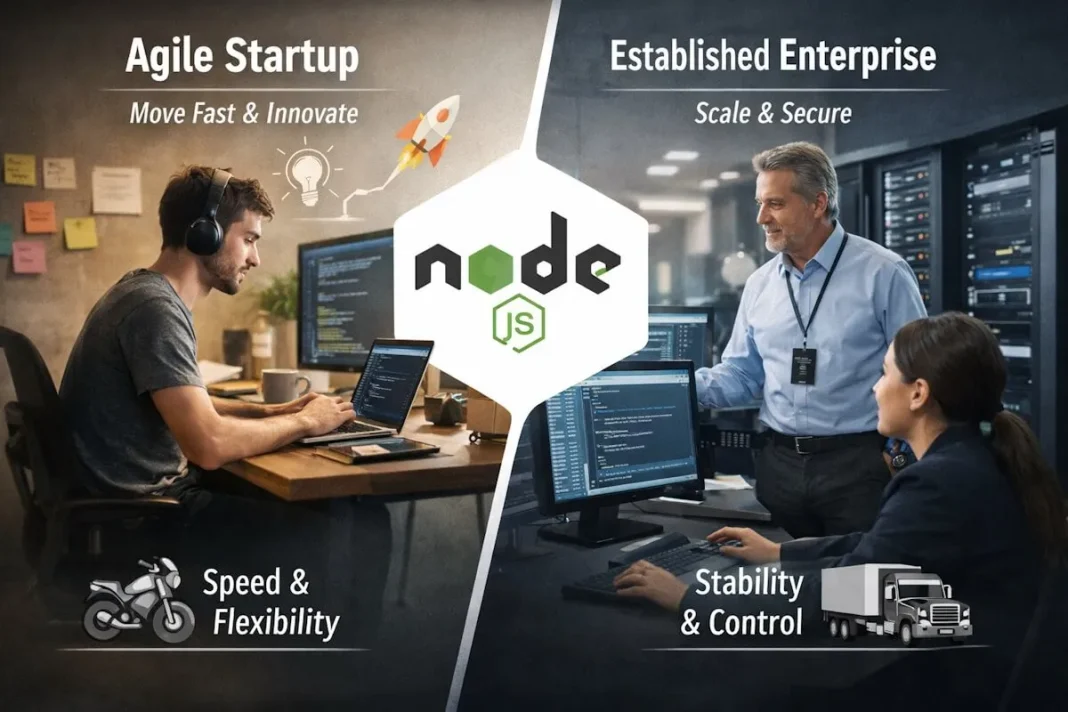
Why does the same tool behave like a fast-moving sports bike for startups and a heavy-duty truck for enterprises?
Let’s break it down in a way that actually makes sense for you and your business goals.
Why Node.js Appeals to Both Worlds
At its core, Node.js is built for speed and handling multiple tasks at once. That’s what makes it attractive across the board.
Startups like it because it lets them move quickly without getting bogged down in complexity. Enterprises like it because it can handle large-scale applications with millions of users.
Same foundation. Different expectations.
Startups want to launch fast. Enterprises want stability and control.
That difference alone shapes how Node.js is used.
How Startups Use Node.js
Startups are all about momentum. You don’t have months to build something perfect. You need something that works, and works now.
That’s where Node.js shines.
1. Speed Over Perfection
Startups often choose NodeJS Development Services because they allow quick development cycles. You can build an MVP in weeks instead of months.
You’re not trying to build the final product on day one. You’re testing ideas.
Does the app solve a real problem?
Will users stick around?
Node.js helps you get those answers quickly.
2. Smaller Teams, Bigger Output
Most startups don’t have massive engineering teams. Sometimes it’s just a handful of developers.
Node.js uses JavaScript on both frontend and backend. That means fewer context switches. One language, fewer headaches.
You get more done with less.
3. Flexibility is Everything
Startups pivot. A lot.
What you planned last month might not matter today. Node.js makes it easier to adjust features, APIs, and workflows without rewriting everything.
You can experiment without fear.
4. Cost Matters. A Lot.
Let’s be honest. Budgets are tight.
Using Hire Node Developers gives startups access to skilled developers without building large in-house teams. That cuts down costs and keeps things lean.
And lean is how startups survive.
How Enterprises Use Node.js
Now let’s switch gears.
Enterprises operate in a completely different environment. They’re not experimenting with ideas. They’re running systems that thousands or millions rely on every day.
That changes everything.
1. Stability Comes First
Enterprises don’t care about launching fast if it breaks later.
They want systems that are predictable, secure, and stable.
Node.js is used here, but with stricter guidelines. Code reviews are tighter. Testing is deeper. Deployment processes are controlled.
Speed is still important, but not at the cost of reliability.
2. Scalable Architecture
Enterprises deal with scale that startups can’t even imagine early on.
We’re talking about massive traffic, global users, and complex workflows.
Node.js supports microservices architecture really well. Instead of one big system, enterprises break applications into smaller services.
Each service does one job. Together, they form a larger system.
This setup makes it easier to scale specific parts without affecting everything else.
3. Integration with Existing Systems
Unlike startups, enterprises don’t start from scratch.
They already have systems in place. Legacy software, databases, internal tools. All of that needs to work together.
Node.js is often used as a bridge. It connects old systems with modern applications.
It’s not always about building new. Sometimes it’s about making old things work better.
4. Larger Teams, Defined Roles
In enterprises, development isn’t a free-for-all.
There are backend teams, frontend teams, DevOps teams, security teams. Everyone has a role.
Node.js fits into this structure, but it’s not the whole story. It’s one piece of a much larger puzzle.
Key Differences in Strategy
Let’s make this practical. Here’s how strategy shifts between startups and enterprises when using Node.js.
Development Approach
Startups move fast and break things.
Enterprises move carefully and document everything.
One prioritizes speed. The other prioritizes consistency.
Code Structure
Startups keep things simple. Sometimes even messy. It’s okay if it works.
Enterprises enforce strict coding standards. Clean, maintainable code is non-negotiable.
Deployment Style
Startups push updates frequently. Sometimes multiple times a day.
Enterprises follow structured release cycles. Changes go through multiple layers before going live.
Risk Tolerance
Startups take risks. It’s part of the game.
Enterprises avoid risks. Downtime can cost millions.
Where Things Overlap
Even with all these differences, there are areas where both startups and enterprises think alike.
Performance Still Matters
No one wants a slow app. Whether you’re a startup or a large company, performance impacts user experience.
Node.js handles concurrent requests well, which helps both sides.
Real-Time Capabilities
Chat apps, live tracking, notifications. These features are popular everywhere.
Node.js makes real-time functionality easier to implement.
Growing Ecosystem
The Node.js ecosystem is huge. Libraries, tools, frameworks, everything is available.
Both startups and enterprises benefit from this shared ecosystem.
Common Mistakes to Avoid
Here’s where things get interesting.
Both startups and enterprises sometimes misuse Node.js, just in different ways.
Startups Trying to Overbuild
Some startups try to build enterprise-level systems too early.
You don’t need a complex microservices setup when you’re still validating your idea.
Keep it simple. Focus on users.
Enterprises Holding Back Too Much
Enterprises sometimes move too slowly.
They overcomplicate processes, which kills momentum.
Node.js is meant to be efficient. If your processes slow it down, you lose its advantage.
Choosing the Right Approach for You
So where do you fit in?
Are you building something new? Testing an idea? Trying to get traction?
Or are you scaling an existing system with real users and real expectations?
Your answers will shape how you use Node.js.
If you’re a startup, focus on speed, flexibility, and cost. Don’t overthink architecture in the early stages.
If you’re an enterprise, focus on scalability, stability, and long-term maintenance. Build systems that last.
Same technology. Different mindset.
A Quick Reality Check
It’s easy to think technology decisions are all about tools.
They’re not.
They’re about context.
Node.js doesn’t magically solve problems. It gives you the ability to build solutions. How you use it depends on your goals, your team, and your constraints.
So before you jump in, ask yourself:
What am I really trying to achieve?
Because that answer matters more than the tech itself.
Wrapping It Up Without Calling It That
Node.js is not just for startups. It’s not just for enterprises either. It sits right in the middle, flexible enough to serve both.
The difference comes down to strategy.
Startups use it to move fast and figure things out.
Enterprises use it to manage scale and maintain control.
Neither approach is right or wrong. They just serve different needs.
If you’re thinking about building with Node.js, don’t just ask if it’s the right technology.
Ask if you’re using it the right way.
That’s where the real difference shows up.